
Artworks
Matching sets
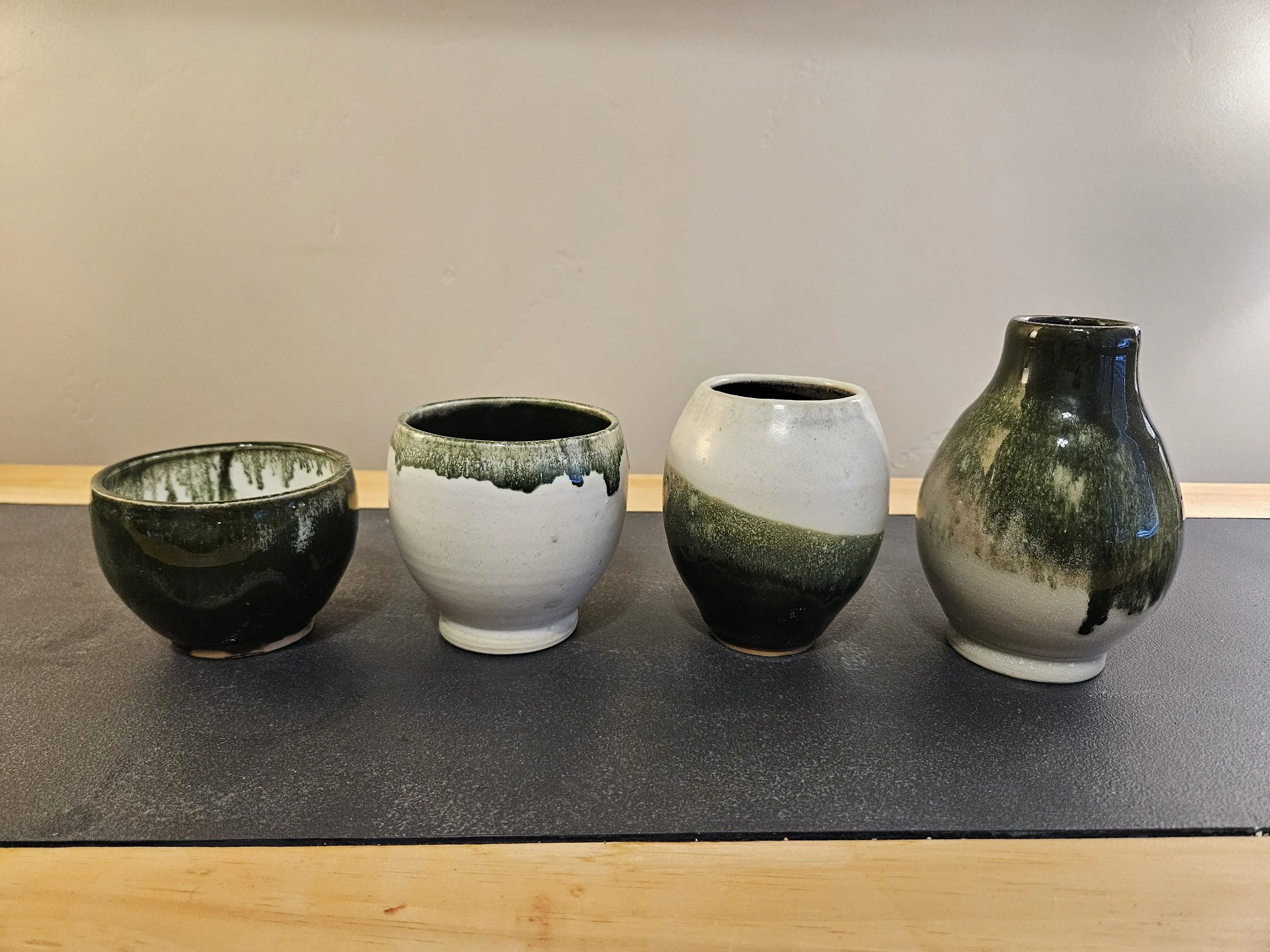
On the right is a set of 4 vessels I made in my ceramic class. The assignment was to make a bottle and then make them progressively smaller, I really enjoyed working on these and making them a matching set.
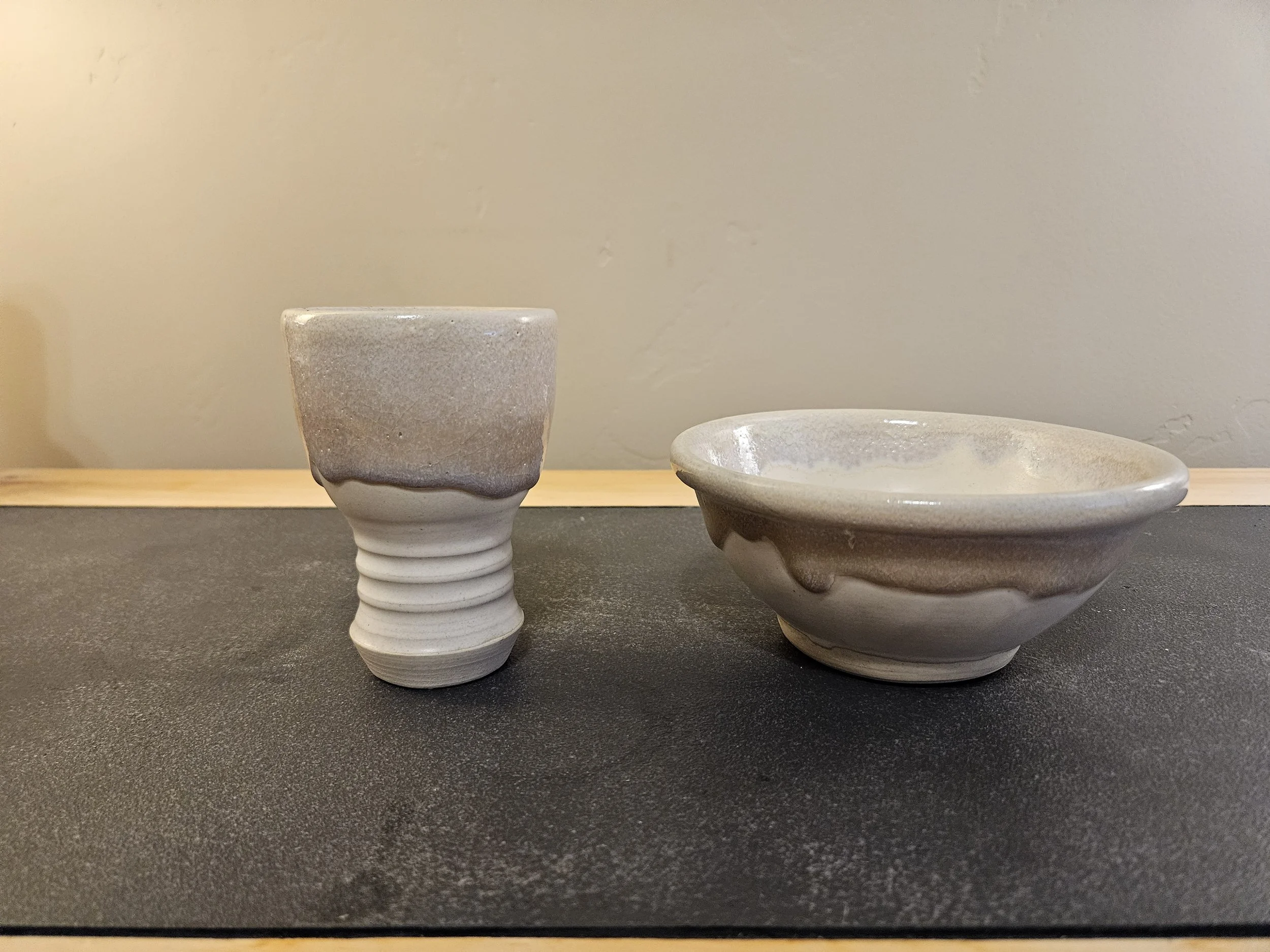
Below is a bowl and cup set that I made as well. These weren’t for an assignment, they were something I just wanted to do, I wish the glazes on them turned out a little better but I’m pleased with them.
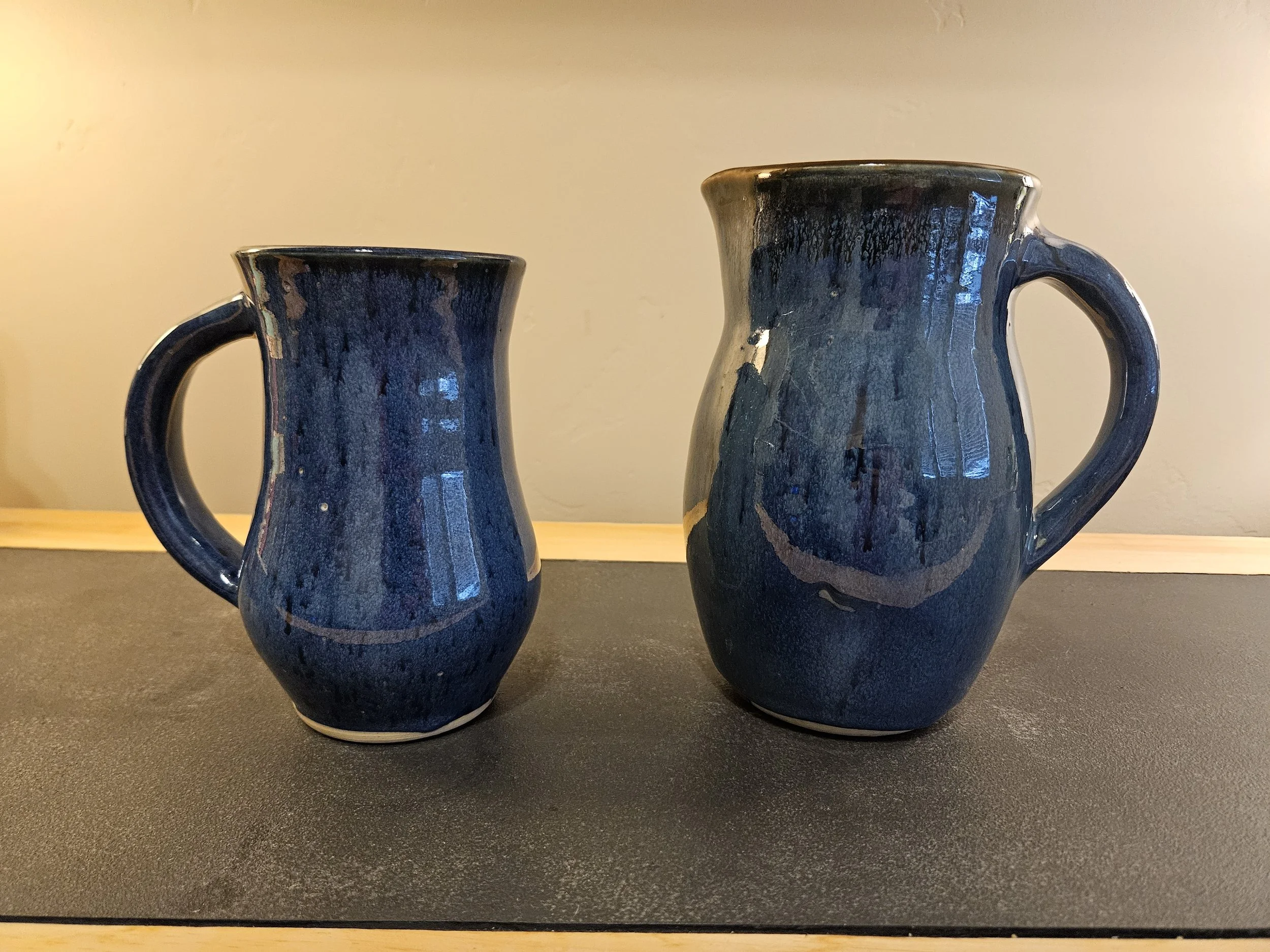
These are a matching stein cup and pitcher. The pitcher was thrown to about 10 inches before shaping and the pitcher to about 12. I’m a big fan of these.
Standalone Forms
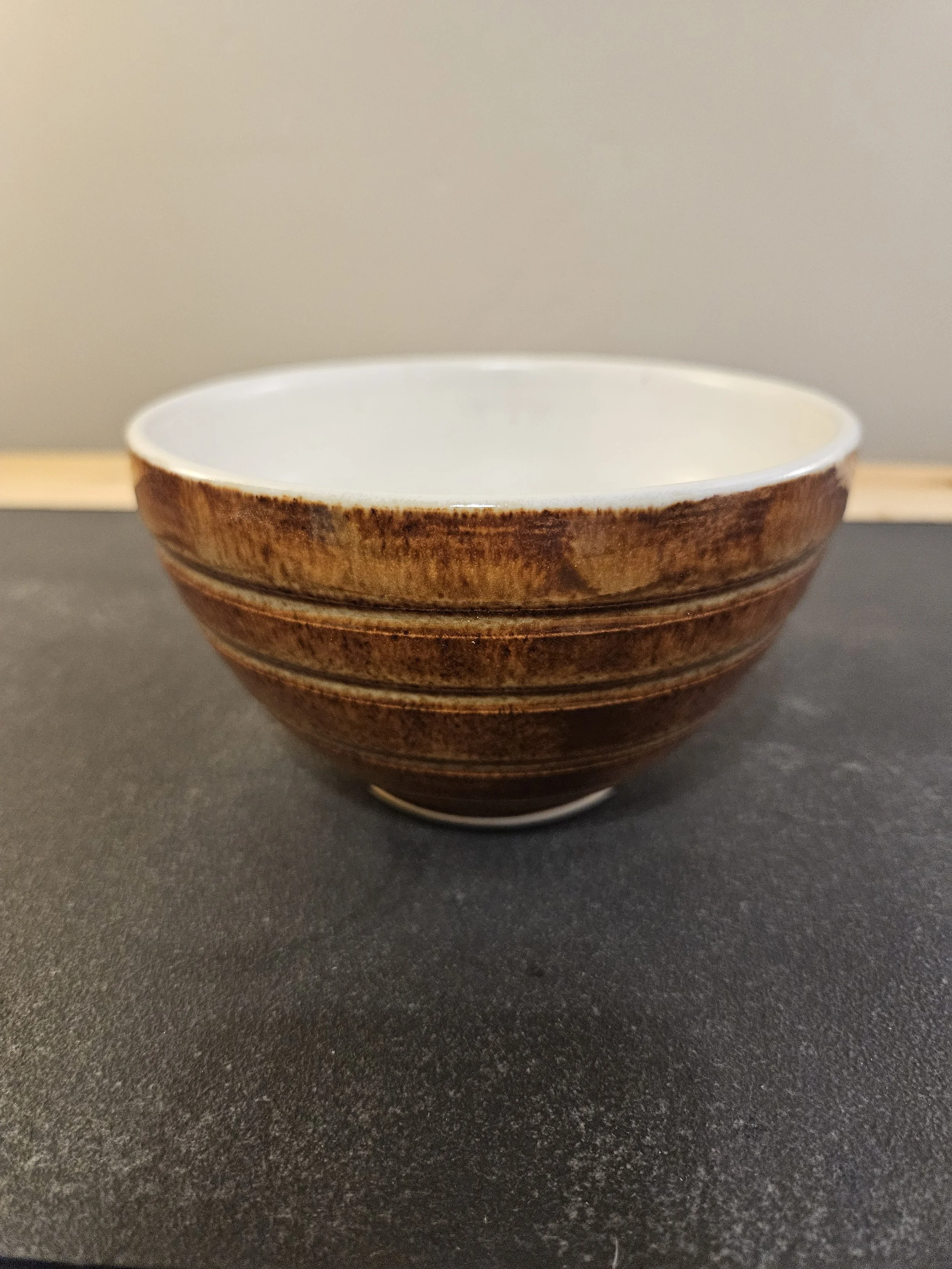
This is a medium sized bowl that I made that I really enjoyed how it turned out, the glaze looks well and the texturing on the bowl as well.
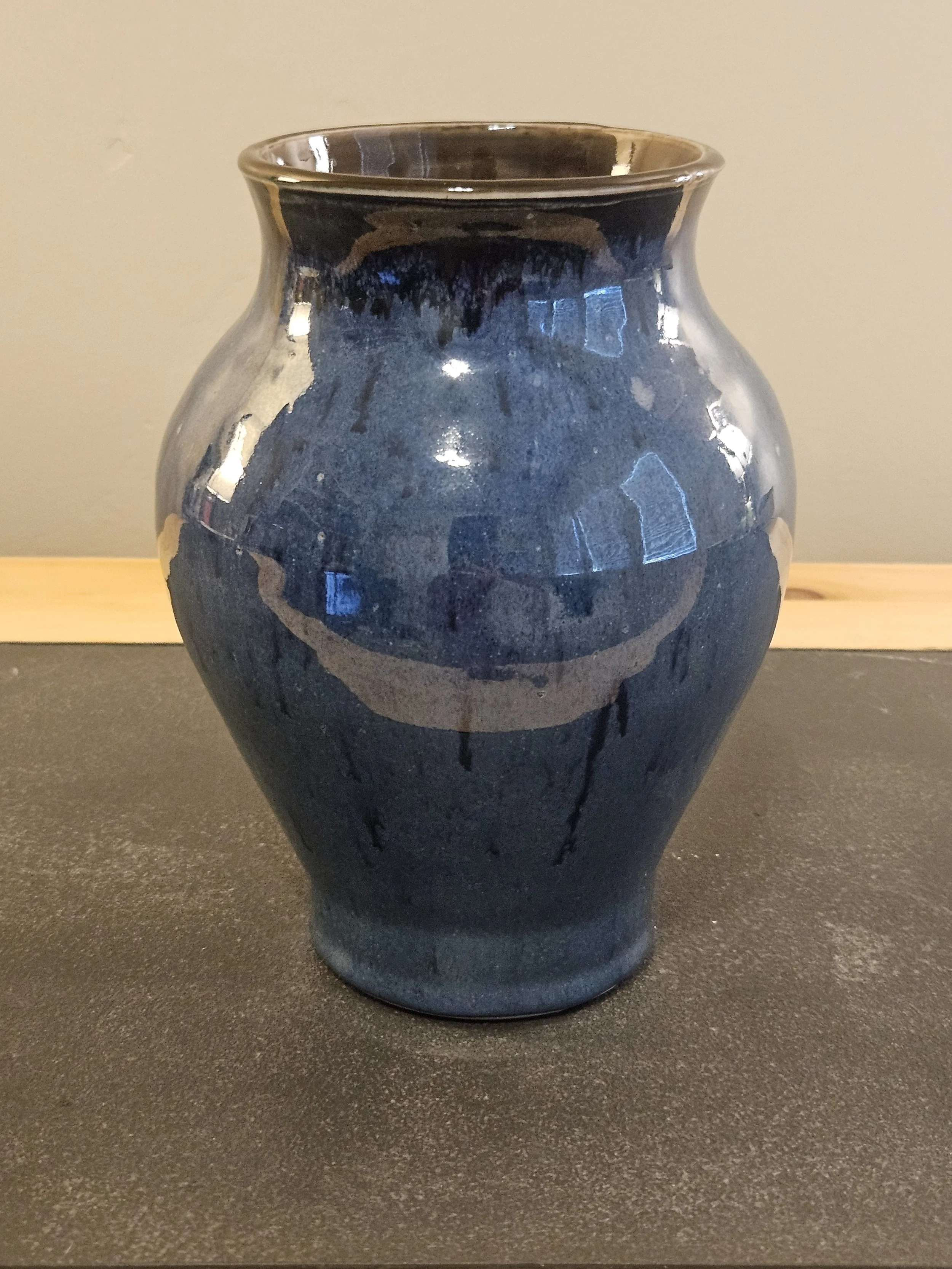
This is a tall vase that I made. When I first threw it, the cylinder was about 12 inches before shaping it, I enjoy the shape of it and how the glaze turned out.
Discussions and Reflections
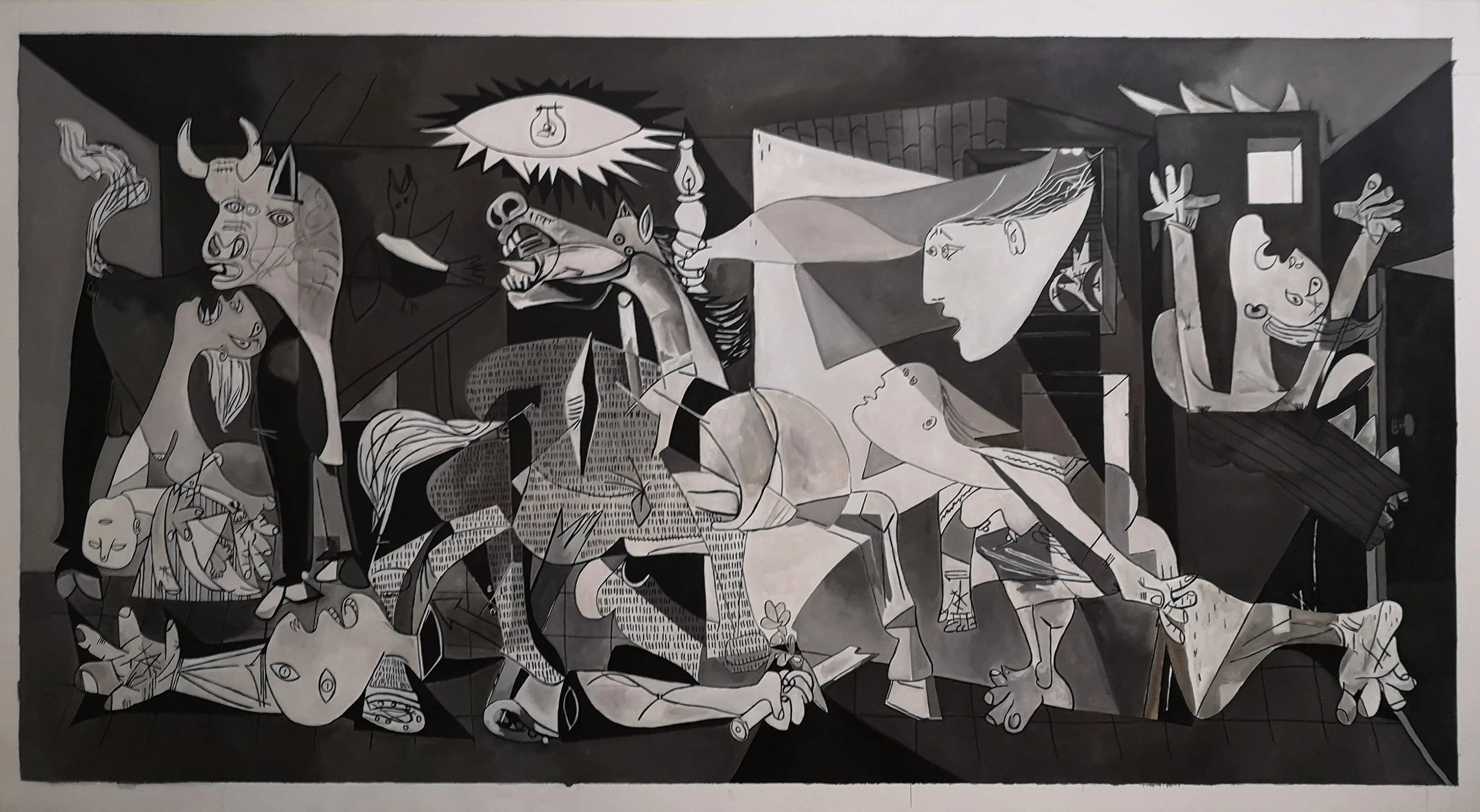
In this class we’ve read and reflected about lots of artworks, one that I particularly enjoyed was Picasso’s Guernica, read about it here:
When most people think about cubism as an artform they probably think about a cubist portrait, or perhaps a distorted figure of someone, but Picasso’s Guernica is something of much heavier value.
For a bit of backstory, in 1936 Picasso was asked by the Spanish republican government to paint an art piece for the Spanish pavilion at the Paris world’s fair. The theme of the world's fair that year was to celebrate modern technology, but rather than painting that, Picasso chose to paint something political, something a little closer to home.
On april 27th, 1927 the german airforce (acting in support of france) bombed the small town of guernica in northern spain. A city that had no relevance to the war, was ruthlessly and mercilessly bombed purely just to test a new bombing tactic and to intimidate those who stood against them. For over three hours, twenty-five bomber planes dropped over 100,000 pounds of bombs and explosives. At the same time, twenty more fighter jets rained down gunfire to any citizens trying to flee. That day over 70% of the city was reduced to rubble with over a third of the population killed or wounded.
A few days later news of this event reached Picasso in Paris, horrified by this he began to draft tens of hundreds of drafts in an attempt to memorialize this gruesome and horrid massacre that had happened. Finishing the painting in less than a month it was delivered to the pavilion where it quickly became the center of attention. With a scale of around 11 feet tall and 20 feet wide the artwork feels like it's swallowing you whole when looking upon it.
In the 1940s when Paris was occupied by the Germans, a nazi reportedly visited Picasso in his office and asked, “did you do that” whilst standing in front of a photograph of the painting, to which Picasso replied with “no, you did”.
The contents of the painting are overwhelming at a first glance. A black and white palate paints a grim and gruesome scene. On the left, a woman, screaming while holding the lifeless body of her child. Under her lies a dead man with a disfigured arm and and mutilated hand clutching a broken sword. To the right of them stands a white plain white bull, the only individual in this painting who seems calm and unharmed. Towards the center is a horse with its head back and mouth open in a scream, whilst being stabbed by a spear. Further to the right there are three women, one entering through a doorway holding a lamp, another looking at a lightbulb at the top of the scene and the last appears to be trapped in fire while screaming upward.
Picasso himself has said there is no one specific meaning to anything in the painting, instead saying that “it isn’t up to the painter to define the symbols. Otherwise, it would be better if he wrote them out in so many words. The public who looks at the picture must interpret the symbols as they understand them”.
Saying that it is up to us the viewer to take in the images we are provided with. I personally believe that Picasso painted an incredibly powerful painting, not only through the content of the painting but through the scale and color palette he picked as well. It’s an impactful painting that perfectly captures Picasso's emotions towards the German bombing of the town of Guernica.
(Guernica displayed here)
We also had discussion posts where we would talk about different artworks as a class and discuss them. One that I particularly enjoyed was the talk about the terracotta soldiers. We had to write 15 facts or things we found interesting and then answer these three questions: Why did the emperor care so much about the soldiers, was this a hard task for those who worked for him, and what is significant about the warriors. Here’s what I had to say about it:
1. each terracotta solider crafted is unique in someway or another, whether that's through the clothes or the hair or face or armor on them
2. the soldiers were first discovered by farmer who were digging for a well
3. the terracotta soldier are surrounding and guarding the tomb of the first emperor
4. there are 4 different pits of varying sizes, all containing soldiers
5. the view of the pits have been heavily changed as to allow viewing of visitors, the originals had roofs over them with wooden support beams
6. construction is believed to have started as early as the emperors first rise to the throne
7. some records state that over 700,000 forced laborers were brought in to help contruction, although its unclear if this many were really used
8. there is roughly 1900 soldiers in there with 22 wooden chariots in pit 1 alone
9. though all the armor and clothing are clay, the weapons they carry were real wood and bronze.
10. pit 2 has 4 sections, each with a different part of the army placed within them, with different soldiers.
11. pit 3 is the smallest, and rather than all of the soldiers facing east like the rest, they face inwards.
12. the fourth pit was entirely excavated but contains no soldiers, some speculate that it wasnt finished in time.
13. it was a common thing for rulers and important people to be buried with things, they believed the person would be able to take the items with them into the afterlife.
14. rather than the solider being placed in the tomb after it was made, the spaces are specific and deliberate to each sector of soldiers.
15. this isnt the only tomb with clay figures, ceramic figures depicting everyday activities have been found in various tombs of people in seats of power.
extra questions:
i think the emperor wanted to be buried with the soldiers because he believed they would come with him into the afterlife and protect him even after death
i think this was a tremendous task, its said that 700,000 people were brought in, and it must have taken incredible talent to sculpt and create every solider and thing that goes with them into the tomb
the warriors are significant because they somewhat demonstrate the beliefs of how the afterlife works and they show the talent of the worker who worked on it and the amount of effort put into a project such as this.